


TOMTOMBook a meeting
HISTORY OF CARE
Learn about this scene ↗

TOM Mountain

Pharmacy learning, brought to life.

Different paths.
One pharmacy mountain.

Meet a fictional cast inspired by the people we’ve met while building TOM. Their stories will bring pharmacy learning to life in an upcoming YouTube series.

Every path brings a different perspective to the summit.

Meet the characters
TOM the bird at the foot of a mountain, with a winding path toward the summit.

A path of your own.
A hand along the way.

Pharmacy has more than one path. Find yours, build on what you know, and help someone along theirs.

Meet your mountain neighbors.

Different experiences. Plenty to learn from each other.

Around the village

The familiar faces who keep the worktables, meeting places, and new opportunities within reach.

Bird · The Vendor Hall

Ellis

Pharmacy operations guide and Vendor Hall keeper

Start with the work you want to make better.

Meet Ellis
Mouse · The Learning Loft
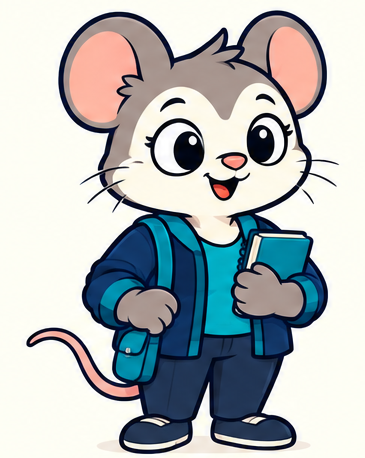
Olivia

Experienced pharmacy technician and mentor

There is room for the question you brought.

Meet Olivia
Bird · The Understone Vault

Flint

Pharmacist, market explorer and Understone guide

A promising seam is the beginning of a question.

Meet Flint
Miniature horse · The Understone Vault
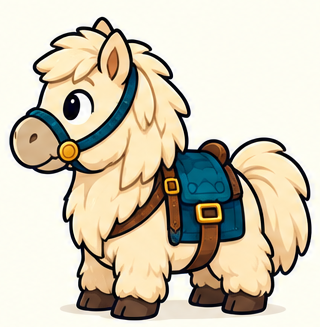
Pebble

Flint's steady trail companion

Small steps still get you somewhere.

Meet Pebble
Dragon · The Understone Vault

Brindle

Understone keeper and enthusiastic collector

The best treasure is useful to someone.

Meet Brindle
Bird · The mountain

Tom the trail guide

Pharmacist and trail guide

There is more than one way up.

Meet Tom the trail guide
Raccoon · TOM's Trading Post

Miles

Trading Post shopkeeper and mountain connector

A good idea can come from anywhere.

Meet Miles
Bird · Basecamp

Wren

Pharmacist and shared-knowledge keeper

Good notes can help the next person.

Meet Wren
Bird · Campfire

Ember

Community pharmacist and Campfire host

Pull up a seat. Your perspective belongs here.

Meet Ember
Bird · The Lodge

Piper

Pharmacist educator and Lodge curator

There is a story worth hearing here.

Meet Piper
Bird · Summit

Aster

Pharmacist mentor and Summit keeper

A new path can begin at any point.

Meet Aster
Bird · Rescue Station

Beacon

Consultant pharmacist and Rescue Station keeper

Let's make the work easier to see.

Meet Beacon
Bird · Research Station

Ada

Pharmacist analyst and Research Station keeper

A useful question comes before a chart.

Meet Ada
Bird · The Workshop
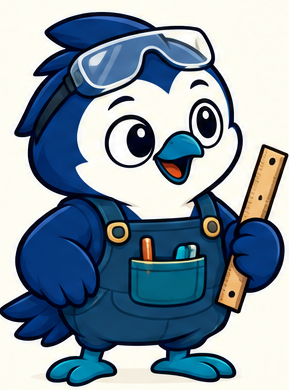
Finch

Pharmacist tinkerer and Workshop keeper

A good idea starts at the workbench.

Meet Finch

Along the Other Trails

Different professions, different ways of seeing. There is room at this table for all of them.
A little light. A little play.

A pause, a friendly welcome, or one more game before you head back out.

Stories from the mountain

Different perspectives. A shared story.

The question nobody wanted to askA practice exercise takes an unexpected turn when Olivia asks the group to name what they do not yet understand.Read the complete story

Featuring Olivia, Pip, Lumi the Lantern Keeper

A very tidy answer

Olivia had brought a practice workflow to the Learning Loft, with a set of task cards and a blank page for questions. Pip arranged the cards in a neat line while Lumi put extra pencils beside the chairs. The exercise looked ready until Olivia asked who was supposed to confirm the final handoff.

Pip pointed to a sentence halfway down the page. It said the task should go to the next available person. That sounded reasonable, but nobody could tell whether that person had agreed to receive it. Olivia left the cards where they were. This was the part of learning she wanted the group to notice.

The feeling of holding everyone up

Pip remembered being new to a busy team and saving questions until a quieter moment that never arrived. Olivia knew that feeling too. Years of technician work had made her more confident about asking, but a new setting could still make familiar habits feel uncertain. Experience meant recognizing that uncertainty sooner, not having an answer to every question.

Lumi asked how they might make the question easier to hear. Olivia tried a first version: she could describe the work she understood, identify the missing responsibility, and ask who could clarify it. Pip noticed that this gave the other person something specific to respond to. Nobody had to pretend the whole process made no sense.

Saying it back

They tried the exercise again. Pip explained the next step in his own words. Olivia heard that they had imagined different receivers, so they paused to correct the card rather than finishing an exercise built on an assumption. Lumi wrote down the change and asked how a learner would know which questions belonged with their supervisor or preceptor.

That opened a second useful conversation about roles, local requirements and the limits of a practice example. Olivia did not turn the exercise into permission to do unfamiliar work. Instead, the group added a place to record who could confirm a responsibility in the real setting. The page became less tidy and much more useful.

A welcome worth remembering

When they packed up, Pip asked Olivia what her first mentor had done well. She remembered a small gesture: setting down a pen and giving the question full attention. It had made her feel like a colleague learning the work, rather than an interruption to it. She had carried that memory through every team she later joined.

Lumi left one blank card beside the pencils for the next gathering. Olivia wrote a heading on it: the detail we still need to understand. The card did not promise that every answer would be simple. It promised that an honest question would have a place on the table.

Four paths from the same doorwayOlivia, Pip and Aster rebuild a welcome board after noticing that one ladder cannot describe every pharmacy career.Read the complete story

Featuring Olivia, Pip, Aster

The ladder on the noticeboard

Aster arrived at the Learning Loft with a freshly drawn welcome board. The arrows rose from a first pharmacy job toward school and then the Summit. It was easy to follow, and that was why Pip hesitated before saying what felt wrong. The board made his technician career look like somewhere a person was expected to leave.

Olivia set her notebook beside the drawing. She knew technicians who wanted to deepen their work, students who were still exploring, and experienced pharmacists considering a different kind of role. A clear picture could still tell the wrong story. Aster turned the board over and asked what the next visitor should be able to choose.

Different questions, real work

They wrote four questions on separate cards. One visitor wanted to understand technician training and development. Another wanted to compare pharmacy programs. A current student needed a useful project and a mentor. An intern needed to understand responsibilities and supervision in a particular setting. The cards belonged at the same table, but their answers would come from different places.

Pip added a question about improving a workflow without leaving the technician role. Olivia placed it beside professional development, where it belonged. Aster added a note for the pharmacist whose experience was substantial but whose next direction was uncertain. A career could turn sideways, deepen, pause or begin again without becoming a lesser route.

A comparison with room for a life

Olivia drew a comparison sheet with room for the intended role, requirements to verify, time, cost questions and someone to speak with. She left a generous space for what a person wanted their working day to feel like. A program list alone would not answer whether a choice fitted the rest of a person's life.

Aster checked that the program links led to actual admissions information. Pip asked them to keep certification, training and state permission separate rather than putting every official-looking word in one box. Where they did not know an answer, they wrote the source to check. The sheet became a way to have a better conversation, not a promise of a place or a job.

The same welcome

The finished board had a doorway with several paths beyond it. Olivia placed practical technician resources beside student and intern materials. Nobody had to choose a lifelong identity at the entrance, and nobody had to describe an existing career as preparation for another one.

Before leaving, Aster put the old ladder drawing inside the notebook. It was a useful reminder of how easily a familiar idea could narrow someone else's future. Pip straightened the welcome sign, and Olivia opened the door. The first question would be what the visitor wanted to explore.

Two jars with the same nameViolet and Wren discover that a familiar plant name is only the beginning of an evidence question.Read the complete story

Featuring Violet, Wren, Lana

The matching labels

Violet set two empty demonstration jars on the greenhouse bench. Each carried the same fictional plant name, but the smaller words on their labels were different. Wren had brought a draft reading note and hoped the jars would make it easier to explain. At first glance, they seemed to be two versions of the same example.

Violet turned them slowly so the whole label could be seen. One described a plant part; the other described a preparation. Neither contained anything to taste or try. This was a question about the words on a label and the evidence someone might be tempted to attach to them.

Looking more closely

Wren had written that a paper about the plant could support the description beside either jar. Violet asked which part of the plant and which preparation the paper actually studied. They returned to the source and found that the missing details mattered. A familiar name had encouraged them to skip the first useful question.

They made a small record of what each label supplied: name, plant part, preparation and source. Empty spaces stayed empty. Violet liked that the worksheet gave a reader permission to notice missing information instead of filling it with confidence. Wren crossed out a broad sentence and wrote a narrower question in its place.

Another neighbor's question

Lana stopped at the bench on her way to Basecamp. Looking at the demonstration, she asked whom the eventual learning note was for. A source about one context should not silently become an answer for another, especially when an animal caregiver might be reading it. Violet added audience and species to the list of details the guide should make clear.

The friends wanted their guide to help a reader prepare a better question and see where a reference did or did not fit. Lana offered to review the separate animal-care questions with Lola before that part of the guide went further.

A better label for uncertainty

By the time the afternoon light moved across the bench, the jars had acquired extra paper tags. One marked a detail they could identify; another marked something still unknown. The display was less symmetrical than Violet had planned, but a visitor could now see why the missing information belonged in the conversation.

Wren closed the draft with a different opening. The guide would help someone read a label and a source together, rather than offering an easy answer from a familiar name. Violet put the empty jars back on the teaching shelf. There was room beside them for the next example that deserved a closer look.

The headline and the paperAn exciting headline reaches the greenhouse, where Violet, Lumen and Ada work out what they can responsibly share.Read the complete story

Featuring Violet, Lumen, Ada

A sentence made for sharing

Lumen brought a made-up news headline to the greenhouse for a reading exercise. It described a promising natural-product finding in a few confident words. The sentence was easy to remember, which was exactly why Violet wanted to look underneath it before adding it to the learning board.

Ada arrived with a blank evidence note rather than another chart. The three friends agreed to treat the headline as the start of a search. They would ask what had been studied, what had been compared, and what the paper itself left unresolved. The note would need to be clear enough for another reader to follow their reasoning.

The study inside the story

Lumen read the methods while Violet looked for the identity and preparation described. Ada recorded the study setting and the outcome the researchers had actually measured. They soon had a more precise question than the headline offered. Some details were available, while others could not be recovered from the short summary.

Violet noticed how tempting it was to imagine that an attractive result would apply beyond the setting studied. Ada drew a line between what the source reported and what the group was wondering about. Both could be interesting, but only one could be presented as the finding. Their uncertainty did not need to disappear for the subject to remain worth learning.

The missing comparison

The first version of their evidence note was nearly as long as the original article. Lumen laughed at the familiar problem: in trying to be careful, they had made the useful part hard to find. They returned to a few questions about the population or model, preparation, comparison, outcome and limitations.

Ada asked each friend to explain the finding in one sentence without leaving out its setting. When their sentences disagreed, they returned to the source. Violet wanted a reader to see what they knew and what still needed checking, without mistaking a shorter summary for stronger evidence.

Curiosity that could travel

The new headline was quieter, but the note beside it was more inviting. It named the question, linked the source and explained the limit the group thought mattered most. Someone could read it quickly and still know where to look next. The learning board finally offered a path into the evidence rather than a conclusion to repeat.

Lumen tucked the fictional headline into the back of the notebook for the next session. Ada left space for a correction, and Violet watered the plant by the window. They had not made the uncertainty disappear. They had made it possible for another neighbor to join the conversation with the same information in view.

The map and the doorFlint, Pebble and Ada discover why Brindle keeps an ordinary notebook beside the treasure.Read the complete story

Featuring Flint, Pebble, Brindle, Ada, Wren

A bright mark

Flint arrived at Ada's desk with a map full of bright marks. Each one might be somewhere a pharmacist could help. He was ready to saddle Pebble and visit them all.

Ada asked one question: what did a bright mark actually mean? Flint looked at the map again. Some marks were old, and some only pointed toward another question.

What the map missed

They chose one passage to explore. Pebble stopped where the path narrowed, beside a small door the map had missed. The sign named a neighbor who had moved to another part of the mountain.

Flint crossed out the old mark and wrote the date. A change to the map was useful too. It could spare the next traveler a journey to the wrong door.

An ordinary notebook

Inside the vault, Brindle opened one eye. Flint expected a question about treasure. The dragon asked whether they had learned anything worth bringing back.

Ada placed their corrected map beside Wren's worn notebook. It held questions from neighbors, the work they hoped to do and the limits they wanted others to understand. Flint began to see why Brindle kept it within reach.

A reason to go

The next expedition had fewer bright marks. Each had a date, an unanswered question and a reason the visit might be useful. Pebble's saddlebags felt lighter.

Brindle gave a delighted laugh that shook a coin off the table, then settled back to sleep. Flint left a space on the map for what they would learn from the person behind the next door.

A place to growViolet and Wren discover what happens when an unfinished idea meets the right collaborators.Read the complete story

Featuring Violet, Lana, Lola, Wren

An empty corner

Violet carried a small plant and a half-finished field notebook into Basecamp. She wanted to start a conversation about the questions families asked when plants and animals shared a home, but the notes still felt untidy. Wren was arranging a draft about pharmacy business operations and looked equally reluctant to let anyone read it.

They laughed when each offered to come back after finishing. Wren moved a pile of pencil shavings and made space at the window. Perhaps the worktable could be useful before the work was ready to impress anyone.

Three ways of noticing

Lana arrived with questions about what a caregiver might be trying to describe. Lola noticed that Violet's headings assumed the reader already knew how to name a plant. Wren asked which statements came from observation and which still needed a source. Violet had been worrying about making the notebook beautiful; her friends were showing her how it could become useful.

Nobody tried to become the expert in every part. They left questions beside the sections that needed another profession's perspective. For Violet, that felt less like handing over unfinished work and more like making room for the work to grow.

A little help

Violet asked Lana to help frame the animal-care questions and Lola to try the introduction as if seeing it for the first time. Wren offered to help organize the references after the next round of reading. The notebook acquired several kinds of handwriting and a more honest title: questions for a shared learning guide.

The plant found a place beside the window. Violet realized she had been treating the whole project like a greenhouse only she could tend. Her friends had brought different tools, and accepting them did not make it less hers.

Room for the next friend

By evening, the guide was still a draft. It had a clearer purpose, named questions for follow-up, and enough room for another reader's correction. Wren finally slid the business-operations draft across the table too.

Lola tucked a spare pencil beside the plant. Lana promised to return after their next conversation, and Violet left a chair ready by the window. The corner was nothing like the finished picture she had imagined. It was more useful, and she was no longer building it alone.

The handoff that landedA community education evening nearly stalls between professions until Lola asks who is carrying the next step.Read the complete story

Featuring Lana, Lola, Violet, Kit, Nell

An idea everyone liked

At the Shared Lookout, Lana suggested a community learning evening about animal care, plants and the questions a pharmacy team might hear. Violet could bring a botanist's perspective. Kit offered to help connect the pharmacy discussion, and Nell asked how people from different backgrounds would find a comfortable way in. Everyone left encouraged.

A week later, Lola found the same blank planning page on the table. Each friend had thought carefully about a different part, but nobody knew who was gathering the first version. The idea had not failed. It had stopped in the space between enthusiastic agreement and shared work.

The missing sentence

Kit asked what each person had expected. Lana was waiting for the audience questions. Violet was preparing an introduction. Nell thought the group was still choosing a format. Lola had quietly started collecting every loose end, a habit familiar from busy days at the Outpost.

Nell recognized the pattern from nursing handoffs and said so kindly. The team needed to know who was bringing the pieces together, what they were waiting on, and when to compare notes. Different professions had not made the idea difficult. Unspoken assumptions had.

A handoff, out loud

Lola agreed to assemble the first outline only after the group made its other responsibilities clear. Lana would frame the veterinary questions; Violet would identify the plant-science topics she could speak to; Kit would ask pharmacist neighbors what they wanted to understand. Nell offered to read the introduction from a newcomer's perspective.

They also left a space for questions that needed a different expert or more research. The outline did not need to answer everything to be a useful next conversation. Lola's notebook grew shorter for the first time that week.

Something they could carry together

When the friends met again, they had an outline they could discuss and several assumptions worth revisiting. The evening was still only a plan, but it was finally a plan the whole group could see. Nobody needed Lola to remember every detail on everyone else's behalf.

Lana thanked her for bringing the problem back to the table. Violet set a small plant beside the shared notes, and Nell stayed for tea. Kit looked at the names beside each section and thought that this was the real work after a good introduction: making it possible to keep working together.

A fair path forwardMiles brings a business idea from another industry and learns how much better it gets when the people doing the work help shape it.Read the complete story

Featuring Lola, Violet, Lana, Miles, Clio

A clever shortcut

Miles the raccoon brought an old service brochure to the Trading Post table. In another valley, a repair team had made its work easier to understand with one simple menu. He wondered whether the same idea might help a small healthcare practice explain what it offered without another long sales conversation.

Lana could see the appeal. Lola wondered who would answer the questions the menu left out. Violet asked what would happen when a visitor needed something outside the listed choices. Miles's familiar idea had reached a profession where the differences mattered as much as the similarities.

Questions are part of the welcome

Clio opened a plain notebook. She asked Miles what the service introduction needed to achieve, then gave each friend time to explain a concern. A question was not a rejection, and a familiar idea was not a finished answer.

Miles set his old plan beside a blank page. He could keep the useful part of his experience and still learn something from the people who would use it.

A smaller beginning

They set aside the idea of a complete menu and tried a single introduction: whom the conversation was for, what question it could help clarify, and how to reach the right person. Lana identified an assumption that needed checking. Lola noticed that the invitation created follow-up work without naming who would receive it.

Clio helped them separate decisions the group could make from claims that needed evidence or an authorized review. Violet read the opening aloud. Miles began to hear where his efficient little brochure had become a barrier to a human conversation.

Useful, and still open to change

The new draft was less clever and much clearer. It had a purpose the team could explain, a realistic next step, and room for a person whose question did not fit the first example. Miles wrote a note in his travel book: ask the people carrying the work what a shortcut will cost them.

Lana and Lola took the draft away for another look. Violet stayed to help move the table back, and Clio closed the sourcebook. Miles had brought an idea from another industry and was leaving with something better: a reason to keep learning from the neighbors he wanted to serve.

Original mountain stories, open to everyone.

Find your way.

PAGES19 results
Book a meetingChoose a date and time with the teamFor ASC teamsProactive pharmacy for your ASCFor pharmacistsBuild a consultant pharmacy practiceResourcesGet the TOM Consultant Pharmacist HandbookSend a messageTalk to the teamTOM Data ServicesPharmacy records and potential compensation through data partnershipsTOM ConsultingA pharmacist for your Texas ASCAbout TOMTop of the Mountain, our founders and Boston UniversityTrust CenterSOC 2, HIPAA and security questionsHomeExplore TOMTOM MountainMeet the neighbors from the MountainSend feedbackSend an idea or issue to supportAsk a security questionTrust CenterRequest the Consultant Pharmacist HandbookResourcesPrivacy PolicyHow TOM handles your informationTerms of ServiceTerms for using TOM’s website and services